Multimedia and Design Career: A Creative Path in the Digital World
In today’s digital age, creativity and technology go hand in hand. From websites and mobile apps to advertisements, movies, social media content, and video games, multimedia and design play a major role in shaping how information is presented and experienced. A career in Multimedia and Design offers exciting opportunities for individuals who are passionate about creativity, storytelling, and visual communication.
If you enjoy creating visuals, editing videos, designing graphics, or developing digital content, multimedia and design could be the perfect career path for you.
What is Multimedia and Design?
Multimedia and design is the field that combines art, technology, and communication to create digital visual content. It includes graphics, animation, video production, web design, and user interface design.
Multimedia professionals create engaging digital experiences using different forms of media such as:
- Images and graphics
- Video and audio
- Animation and motion graphics
- Interactive websites and applications
- Social media and digital marketing content
These elements are used across industries such as advertising, entertainment, education, marketing, gaming, and digital media.
Why Multimedia and Design is a Great Career Choice
The demand for multimedia professionals has increased significantly as businesses and organizations rely heavily on digital platforms to communicate with their audience.
Growing Digital Industry
Every company today needs digital content for websites, social media, marketing campaigns, and branding.
High Demand for Creative Professionals
Graphic designers, video editors, animators, and UI/UX designers are highly sought after in industries such as advertising, media, technology, and entertainment.
Freelance Opportunities
Multimedia professionals can work as freelancers, offering services globally through online platforms.
Work in Multiple Industries
From film production and gaming to education and e-commerce, multimedia skills are needed everywhere.
Opportunity to Express Creativity
Unlike many traditional careers, multimedia allows individuals to express their creativity while working with modern technology.
Skills Required for a Multimedia Career
To build a successful career in multimedia and design, students need both creative and technical skills.
Creativity and Visual Thinking
The ability to transform ideas into visually appealing designs is essential.
Graphic Design Skills
Understanding color theory, typography, layout design, and visual hierarchy is important.
Software Skills
Multimedia professionals use various design and editing software such as:
- Adobe Photoshop
- Adobe Illustrator
- Adobe Premiere Pro
- Adobe After Effects
- CorelDRAW
- Blender or other animation tools
Video Editing and Animation
With the growing popularity of video content, animation and motion graphics skills are highly valuable.
Communication Skills
Designers must understand client requirements and communicate ideas effectively through visuals.
Popular Career Options in Multimedia and Design
A multimedia and design education opens doors to many exciting career paths.
Graphic Designer
Graphic designers create visual concepts for branding, advertisements, posters, brochures, and digital content.
Video Editor
Video editors work on films, YouTube content, advertisements, and social media videos.
Animator
Animators create moving visuals for movies, games, advertisements, and educational content.
UI/UX Designer
UI/UX designers focus on creating user-friendly designs for websites and mobile applications.
Web Designer
Web designers build visually appealing and interactive websites.
Motion Graphics Artist
Motion graphics professionals create animated graphics used in advertisements, films, and digital media.
Social Media Content Creator
Many companies hire multimedia professionals to design engaging social media content.
Tools Used in Multimedia and Design
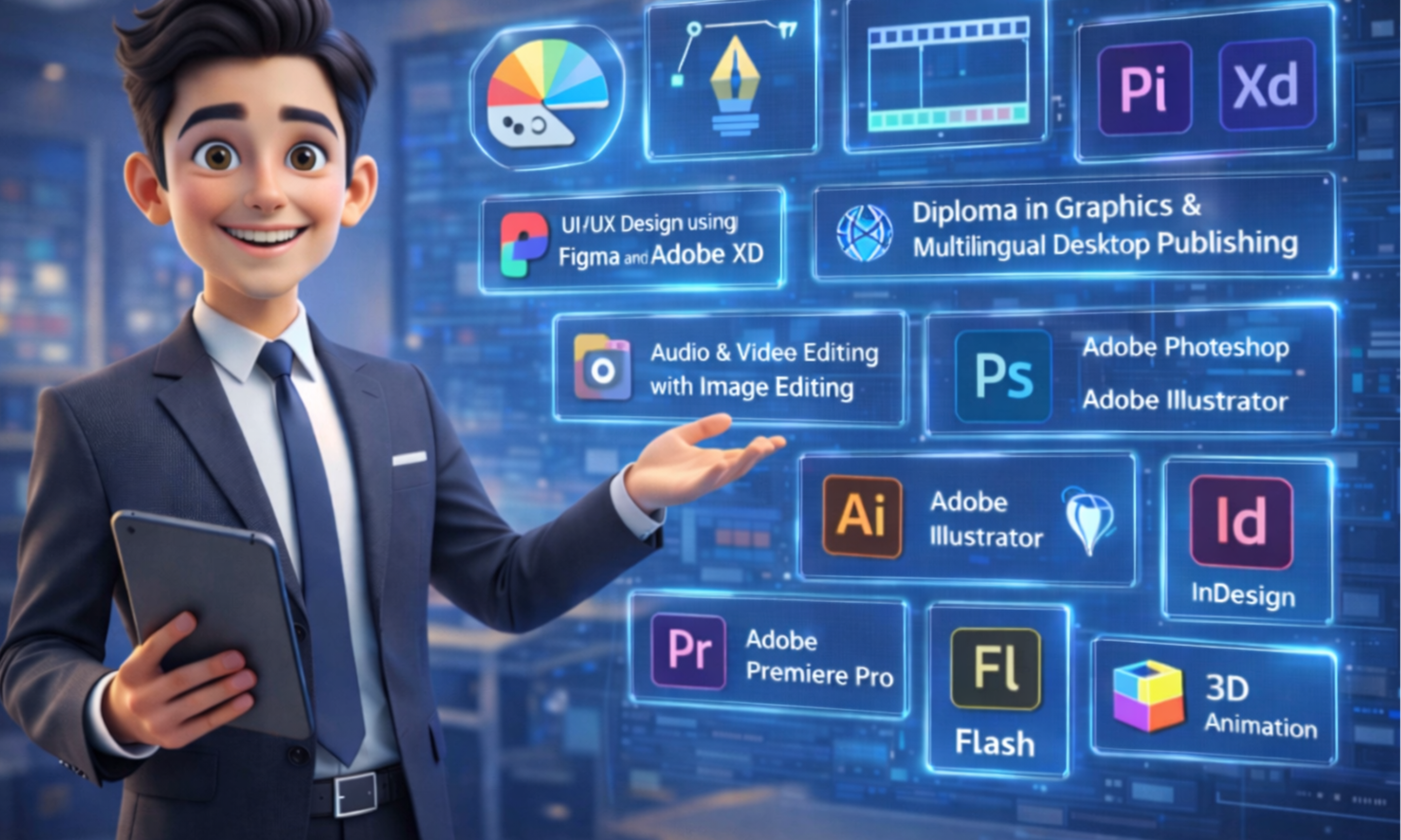
Modern multimedia education includes learning industry-standard tools such as:
- Adobe Photoshop – Image editing and graphic design
- Adobe Illustrator – Vector graphics and logos
- Adobe Premiere Pro – Video editing
- After Effects – Motion graphics and animation
- CorelDRAW – Professional graphic design
- Figma or Adobe XD – UI/UX design
Mastering these tools prepares students for real-world creative jobs.
Industries That Hire Multimedia Professionals
Multimedia and design professionals can work in a wide range of industries:
- Advertising agencies
- Film and television production
- Gaming companies
- Digital marketing agencies
- Web development companies
- Media and publishing houses
- Educational content companies
- Corporate marketing departments
Because digital content is everywhere, opportunities in this field continue to grow.
Freelancing and Entrepreneurship
One of the biggest advantages of a multimedia career is the ability to work independently.
Many designers and editors work as freelancers, offering services such as:
- Logo design
- Video editing
- Social media design
- Website design
- Branding and marketing materials
With online platforms and social media, talented designers can build their own brand and work with clients from around the world.
Future Scope of Multimedia and Design
The future of multimedia and design is extremely promising due to emerging technologies.
Growth of Digital Marketing
Businesses rely heavily on visual content to promote their products online.
Rise of Video Content
Platforms like YouTube, Instagram, and TikTok have increased demand for video editors and motion graphics designers.
Virtual Reality and Augmented Reality
Multimedia professionals are now involved in creating immersive experiences using VR and AR technologies.
Artificial Intelligence in Design
AI tools are helping designers work faster while still requiring creativity and human ideas.
How to Start a Career in Multimedia and Design
To begin a career in multimedia and design, students can enroll in professional courses that provide practical training and industry exposure.
A good multimedia course typically includes:
- Graphic design training
- Video editing and animation
- Web and UI design
- Digital content creation
- Portfolio development
Practical training and project-based learning are essential to building a strong portfolio that attracts employers.